
Written by Emma Ellison based on an interview with Doris Zuur.
On a Saturday morning in Paekākāriki, the tool library is open.
People come by to borrow a spade, a sander, a ladder, a drill or the trailer. There are tools to sign out, projects to talk about, and Doris’ oaties on the table.
Someone might arrive because they need something practical, but often they leave with something else as well: a conversation, a new connection, or a small reminder that this village knows how to take care of itself.
For Doris, that is the story that interests her.
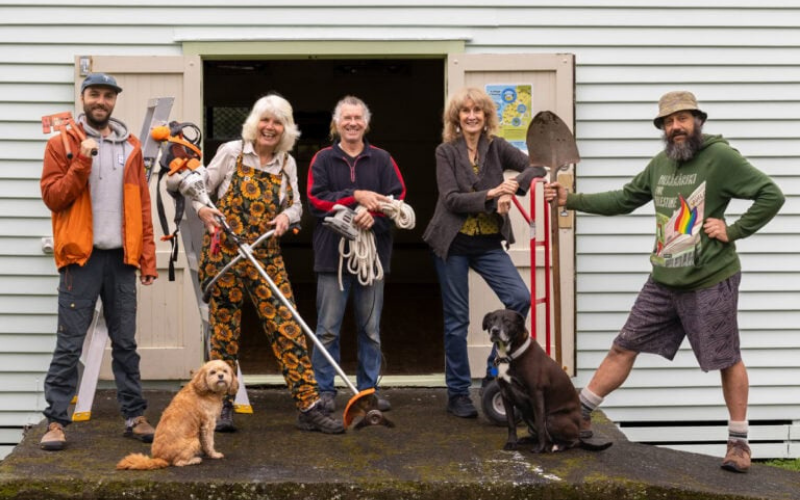
The marvellous team running the tool library
The Paekākāriki Tool Library is useful, of course. It saves people money, helps tools get repaired and maintained instead of tossed away, reduces waste, and means every household does not need to own every tool.
But underneath the practical side is a bigger idea: that a good life might be built with less stuff and more relationships, and with local action that helps us take care of each other and the planet.
The practical need for a tool becomes an icebreaker. Someone comes in looking for a saw and ends up talking about their garden, their fence, their project, their week, their joys and challenges. Someone else overhears and offers support, practical help, a contact, or another way of doing it.
The tool is the reason to show up. The relationship is what grows around it.
“It’s not really about the tool library,” Doris says. “It’s about one of the many ways we create connections in this village, and the unexpected ripples that happen from that.”
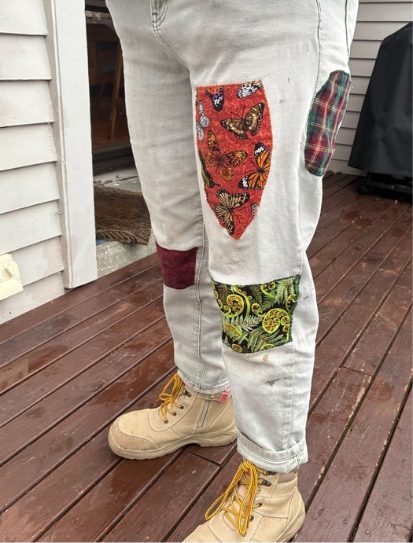
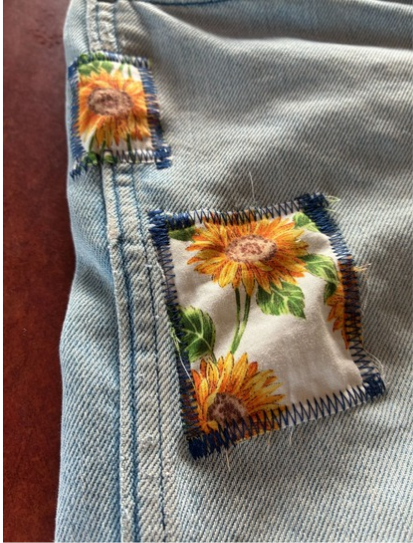
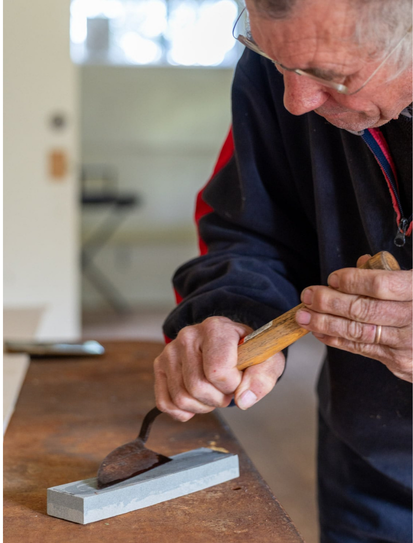
Unexpected ripples that may happen at the tool library:
Your favourite jeans get fixed and your favourite tool
sharpened…….., and what else…..??
A village pattern
The tool library is part of a wider pattern of local sharing and caring in Paekākāriki.
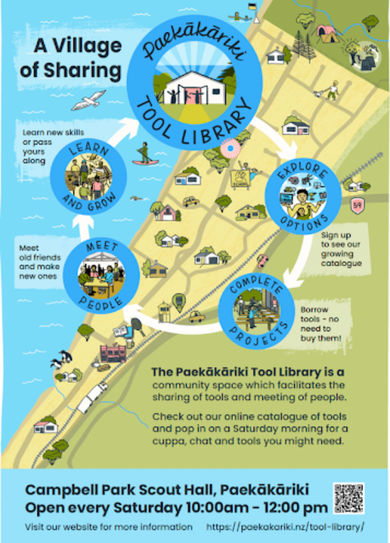
Alongside it are the bike library, open on Thursdays, the traditional book library on Saturday mornings, Pae Cycle collecting food scraps, POG the community garden making compost and growing fruit and veggies for all, PaeKai cooking for those who need it, Pātaka Kai sharing food through the pantry, and regular rhythms of people gathering in other ways.
The mermaids swim every morning. The Carb Club meets to grow potatoes and pumpkins together. The Potty Potters gather on Fridays to propagate plants for revegetation and school fundraising. Other groups trap predators, plant trees in the park, restore wetlands and care for the escarpment.
There are many more examples, and Doris sees the growing camaraderie of these regular meet-ups as just as important as the activities themselves.
For her, they are small but powerful examples of another way of living. One based less on “more and more stuff” and more on “more and more connections”. People lending and borrowing, repairing and sharing, making compost and growing food, caring deeply, laughing often, and feeling part of something.
“It’s regeneration and rejuvenation on all levels, all at the same time,” she says.
A different kind of abundance
Describing her why, her motivation for her involvement in the tool library made Doris think of the principles of Degrowth presented by Degrowth Aotearoa NZ, and how the tool library fits right into the middle of those principles.
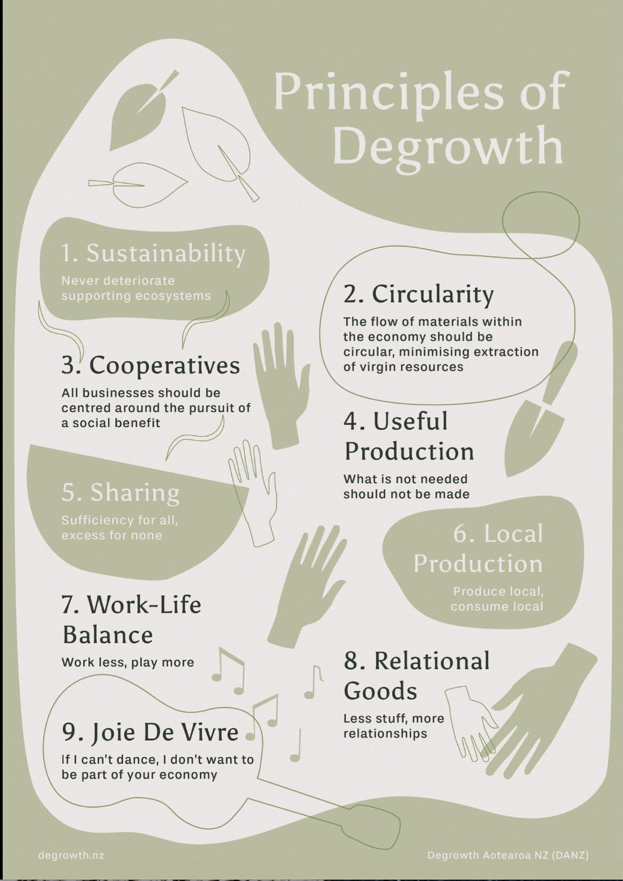
Circularity appears when tools are used again and again instead of sitting unused in garages. Sharing happens when a trailer donated by a local tradie becomes a resource for the whole village. Growing potatoes and pumpkins together is useful and local production. Relational goods appear when people begin to know one another through the simple act of borrowing and returning. Joie de vivre is there in the pleasure of turning up, having a laugh, eating a biscuit, and feeling part of something.
She laughs that the word “degrowth” itself is not especially inviting.
“It’s not such an inspiring or commonly used word,” she says.
But perhaps that is part of its strength. Popular words like regeneration and sustainability have sadly been diluted and bastardised by marketing, whereas degrowth resists being bent and cannot be misinterpreted. The word has clear meaning by itself and asks the crucial questions: Can we do with less? What is an ‘economy of enough’ which is not based on profitable growth but on another type of abundance mimicking nature with its infinite cycles? A circular economy? What can be shared? What do we actually need and use? What kind of abundance and generosity can we grow within our finite resources?
A sense of abundance runs through the tool library. It is not an abundance of stuff and excess, but abundance of enough. Enough tools to share. Enough time to stop and talk. Enough trust to borrow and return. Enough local generosity and energy to get something started.
And perhaps most importantly, enough hope to act.
Choosing to act locally
Doris deeply cares about the challenges facing the world. Climate change, ecological breakdown, inequality and social disconnection are not abstract ideas. However, the scale of those challenges becomes overwhelming, and her response is local action within the community.
A sharing pantry will not solve poverty. A tool library will not solve overconsumption alone. A bike library will not solve transport emissions on its own. But these projects are visible gestures of another way, for mutual support and increased connectedness as the foundation of robust resilience.
Driving past a generous roadside stall can shift something in a person. It is a reminder that people are still willing to help each other. That not everything has to be bought. That care can be made visible.
She believes that small local actions from one village can be amplified and multiplied. “Local action scaled DOES make a difference!”
This is practical optimism. Not pretending the world is fine. Not offering cheerful slogans. Not ignoring the scale of the problems. But choosing to begin in the home turf, with the people and resources close at hand.
In Paekākāriki, that might look like a tool library, cooking for someone who needs it, or joining a planting crew.
It might look like a donated trailer.
It might look like coffee and biscuits on Saturday mornings, and someone saying, “I can help with that.”
Aroha nui
Emma Ellison
on behalf of the Toru Education Trust
- Log in to post comments