
Kia ora Toru community,
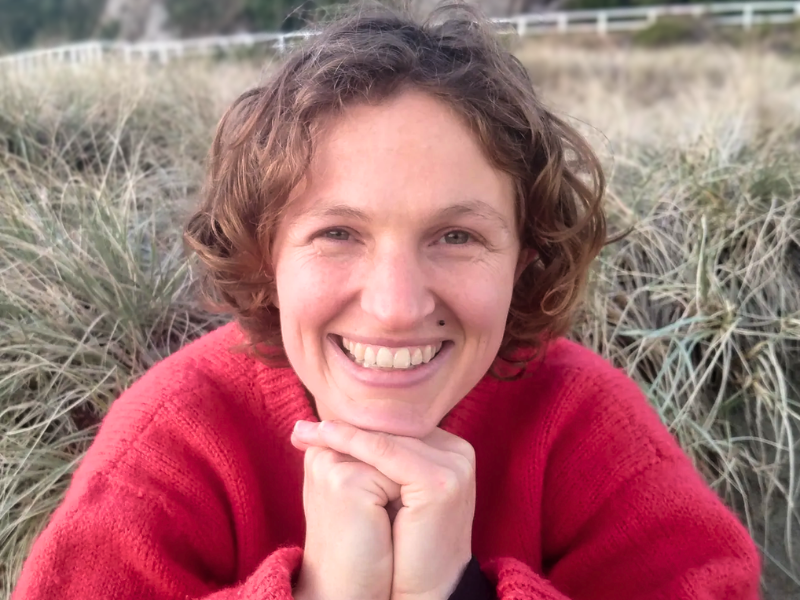
It’s Loo Connor here. I joined the Toru board last year and have been delighted to take some time over the last few months to get to know our community and purpose.
My background is in science communication. I’ve spent most of my career helping scientists communicate their wondrous and inexplicable discoveries in language we can all understand. More recently, through The Good Energy Project (a personal exploration and podcast), I’ve been exploring how our dominant systems shape both the health of the natural world and ourselves, as we are intrinsically connected.
I’ve been searching for ways to step back from industrial systems and live with more care and connection.
Coming into Toru feels like a perfect transition from this work. The Good Energy Project has been teaching me how our economic system can separate us from the web of life and deepen our dependence on industrial systems to survive. Again and again, it showed me a simple truth: we need to re-learn how to work together and reconnect with the living world around us.
I was left with a very simple desire to get off my computer, get to know the people in my new community (Paekākāriki) and get my hands in the soil. Early last year I met Toru founder Doris Zuur, while making compost at the local Community Garden. She invited me over for coffee and chats and soon I found myself joining the Toru board of trustees.
For me, Toru grounds the big ideas and aspirations of The Good Energy Project in a practical local context, which is just what I was looking for.
A time of transition for Toru
You may have picked up that Toru is in a time of transition.
Over the past few years, our wonderful trustees Doris, Hella Coenen, and Fiona Naismith have carried much of the work to keep the organisation going. This has included facilitating Toru Trails and workshops, writing newsletters, and using their deep networks of connection to bring people together.
Last year, several new people joined the board, bringing fresh energy and ideas. Denis Grennell from Ōtaki brings deep knowledge of te Ao Māori and its relationship to permaculture. Jess Feast brings her passion and expertise in documentary filmmaking. Emma Ellison returns with her long-standing connection to Toru and her passion for community weaving.
Most recently, Adam Shand has joined us, bringing experience in technology, permaculture, and community building.
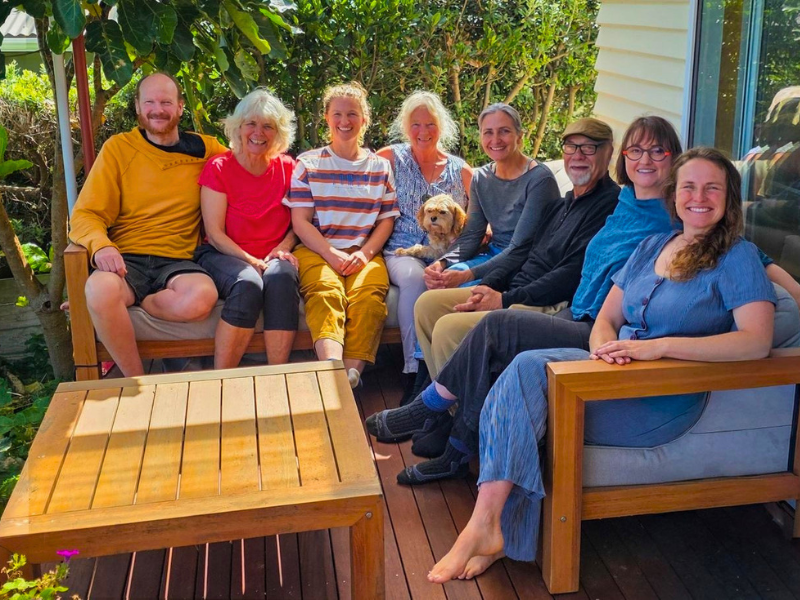
Photo captured by Bob Zuur - Moments of Light Photography
We began by listening
Last year we met and began to explore where this new energy might take us. We decided to start our planning process with a listening phase, to connect with our partners and find out what’s needed. I was honoured to be able to lead this listening work and over the summer had some wonderful conversations with partners across the region. I asked them about their work, their challenges, their dreams and hopes for the future, as well as their experiences of Toru. We reflected on what we learnt in our recent blog, Following What Brings Us Alive. I wanted to share some further thoughts here.
An extensive but often invisible network
These conversations have been such an enriching and inspiring experience. I was blown away by the amount of innovative initiatives happening in our region that I had no idea about before, including food forests, regenerative farms, restoration projects, rongoa practitioners. Each conversation revealed more people and initiatives. I got the sense that I was brushing the surface of an extensive but largely invisible network of small businesses, clubs and groups of people doing amazing work towards regeneration.

I was also struck by how hard it is to sustain this work. Our economic system is not set up for regenerative initiatives to succeed. Current economic pressures are making it even harder. Small businesses are struggling to attract customers, and workshops are not always reaching the numbers needed. Several people spoke about feeling isolated, with little time or energy to connect beyond their own projects. It can be especially challenging when the wider community doesn’t understand or appreciate your approach. At times it can feel like lonely thankless work.
At the same time, there is incredible resilience. People are finding ingenious and resourceful ways to make ends meet.
Toru exists to celebrate, uplift and connect the regenerative movement
Throughout my conversations, I kept hearing the same thing. If regenerative initiatives are going to succeed in our current economic climate, we need to work together. Rather than competing against each other for a small pool of customers and resources, it makes so much more sense to work together, share resources and pool strengths to grow support for the regenerative movement as a whole.
As food and petrol costs go up, it’s becoming clearer and clearer that we’re not talking about a nice alternative. Regenerative and ecological approaches are the only realistic and practical way to look after our people and environment as global pressures increase.
As I spoke to our partners, I started to get a sense of the value Toru can offer. Almost everyone I spoke to expressed the need for some kind of hub for regenerative activity in the region - something that can bring energy, attention and support to their work and help to generate awareness and support for the movement as a whole.
Several people expressed their gratitude for the work Toru is doing to celebrate regenerative initiatives and join the dots. It was also clear that Toru needs to connect more widely to achieve the vision of a comprehensive regional hub. My conversations generated a long list of groups and initiatives to follow up on!
I also heard that people are more interested in what’s going on in their local area than in more distant parts of the region. They wanted a way to easily discover what’s happening locally, and a stronger sense of being part of something wider.
We’re considering the possibility of improving our website with simple tools, such as a shared map or a more comprehensive events hub, to make local activity more visible and accessible. We’re also exploring the use of AI to help us find initiatives and events.
We’ve been exploring potential collaborations in this space, recognising the value of collaboration and shared effort, rather than working in isolation.
Toru as a mycelium network for the regenerative movement
At a recent trustee hui, Doris reflected on the work of Paul Hawken, particularly his book Blessed Unrest and a related talk that has inspired her for many years. He describes the world’s largest social movement made out of all the diverse initiatives that care for the earth and people. If we can see that we are part of this movement and work together, we can find the power to create abundant regenerative systems that actually work!
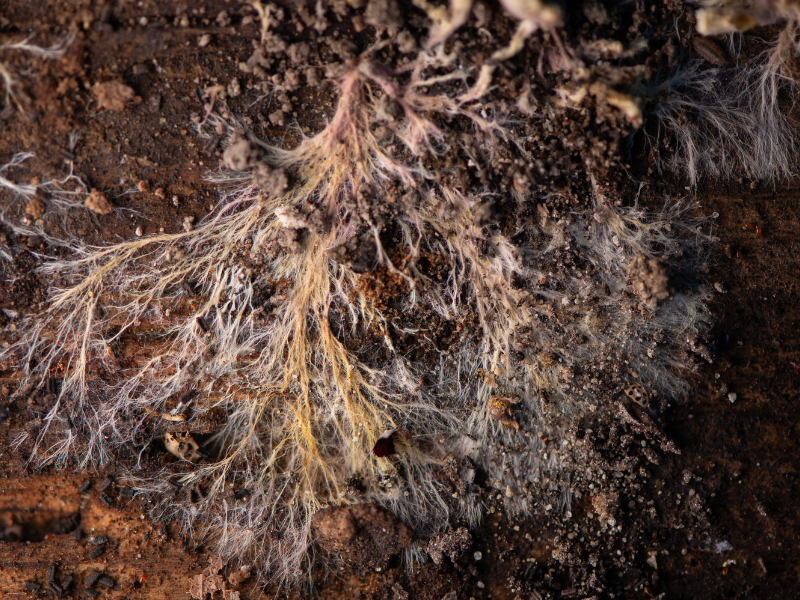
Through my conversations with partners, an image started to form of Toru as a kind of mycelium network for the regenerative movement. Supporting connection, nourishing relationships, and helping ideas and energy flow between people and places, much like mycelium does in a forest.
We’re planning our next steps - watch this space!
When I shared my learnings from the listening phase with the Toru Board last month, we got quite excited about the possibilities. It feels good to step back from hosting our own events and trails for now and focus on uplifting and connecting all the exciting stuff that’s happening already.
We’re delighted to be continuing with our monthly newsletters as we explore options for improving our website and building a more interactive, user-friendly hub.
One area we feel especially drawn to is storytelling. At our hui, we spoke about the power of stories to share ideas in a way that feels respectful and connecting. Stories help us feel what is possible, rather than simply thinking about it, allowing ideas and inspiration to move and connect.
We don’t know exactly what forms our storytelling will take yet - film, podcast, pictures, words - but we do know that storytelling will be a core thread in our offerings going forward.
At the moment, we’re busy working on a plan and searching for funding to make it possible. We’ll keep in touch through our newsletters as our plans develop.
If you have ideas or suggestions, or would like to support this work, we would love to hear from you. Financial contributions help us continue storytelling, maintain the platform, and grow this work in a sustainable way.
Aroha nui
Loo
on behalf of the Toru Education Trust
- Log in to post comments