
It was a cracker of a morning driving down from Ōtaki to Paekākāriki, a reminder of just how good it is to live on the coast. I did a housesit in Paekākāriki a couple of years ago and loved the sense of community, as well as walking behind the motor camp at the end of Tilley Road, past the community gardens and through Queen Elizabeth Park.
One of the things I really appreciate about Toru Trail events is that the group is always different. Each gathering begins with whanaungatanga, where we introduce ourselves and share our interests and questions. It’s a simple practice, but it makes a big difference. It helps everyone feel more at ease asking questions, and it allows the hosts to shape the day around what people are genuinely curious about.
A Suburban Garden by the Sea
This event was particularly interesting for me because it took place in Doris’s suburban garden, rather than on a lifestyle block or farm. It felt much closer to my own situation. Being coastal, the garden is shaped by the salty nor’wester, which is the prevailing wind in Paekākāriki. Over the last equinox this has been a real challenge for me at home, and walking around the neighbourhood it was clear how much the wind influences the shape and growth of trees here.
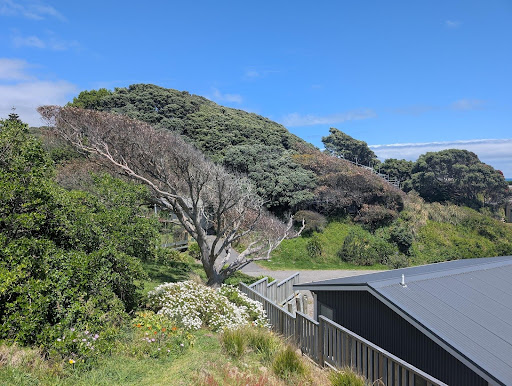
In the more exposed front yard, hardier plants have been chosen to cope with these conditions. Tucked safely among them is an adorable foraging food garden for the grandchildren.
Play, Food and Shelter
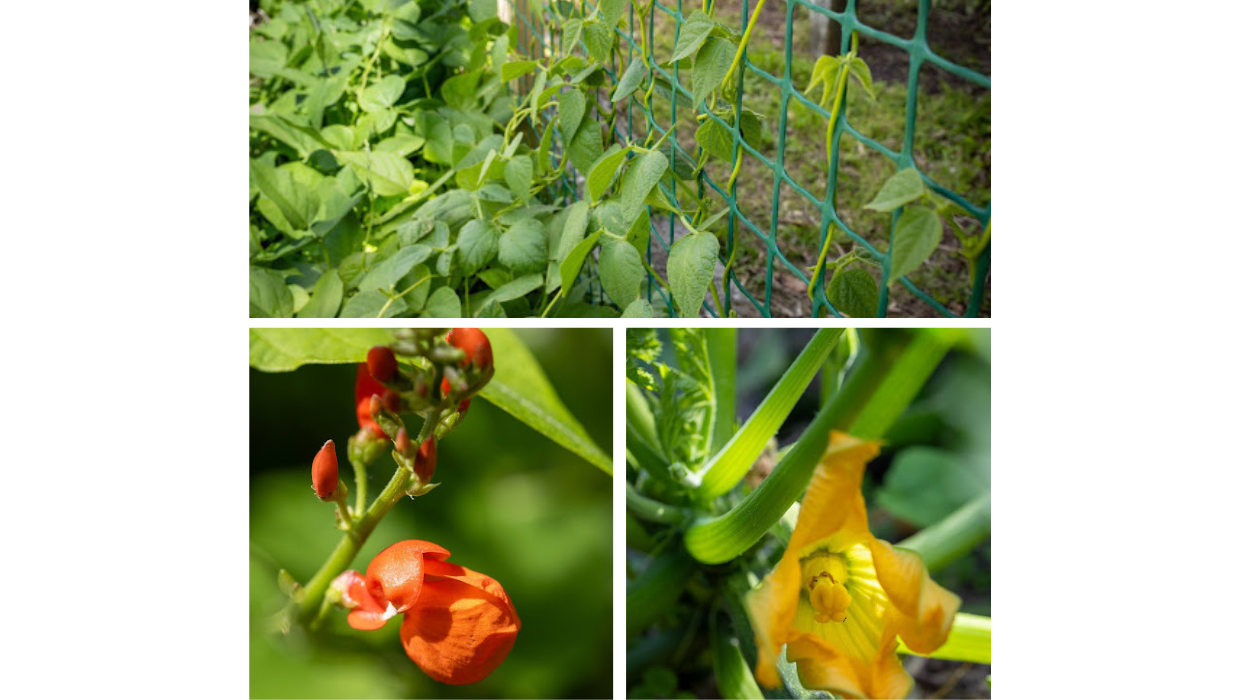
There is a playhouse with runner beans climbing around it, surrounded by basil, tomatoes, capsicum and many edible flowers. These are used for making concoctions and potions in the mud kitchen. It is a joyful, living space that invites curiosity and play.
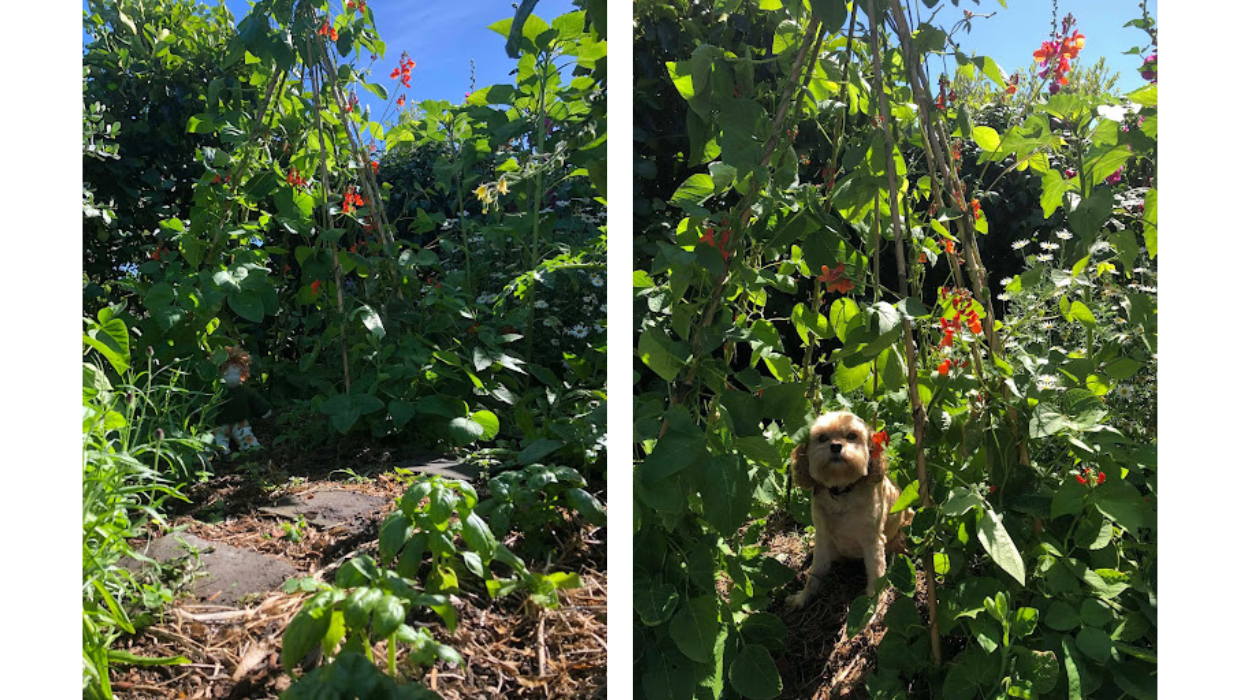
A playhouse with the runner beans, surrounded by basil, tomatoes and capsicum, and many edible flowers
to make concoctions and potions with, in the mud kitchen. And a first inhabitant, trying it out!
The backyard, sheltered by the house, holds the main food gardens, fruit trees and hen house, along with established native and exotic trees. One detail that really stood out was the hens’ seasonal rotation. They have a summer yard and a winter yard, moving closer to the house during winter, where they forage and fertilise the garden in preparation for the growing season.
Embracing Diversity and Abundance
Doris describes her gardening style as mixed and a little chaotic, and she embraces diversity wholeheartedly. Spontaneous plants from previous seasons pop up everywhere. Hollyhock, sunflowers, pumpkins, beans, calendula, borage and comfrey all appeared without being planted. These volunteers provide food for bees and beneficial insects, and add to the richness of the space.
Tomatoes, cucumbers, zucchini and greens are planted each year and intentionally interplanted with marigolds, herbs and flowers as companion plants. The result is a garden that feels abundant, alive and generous.
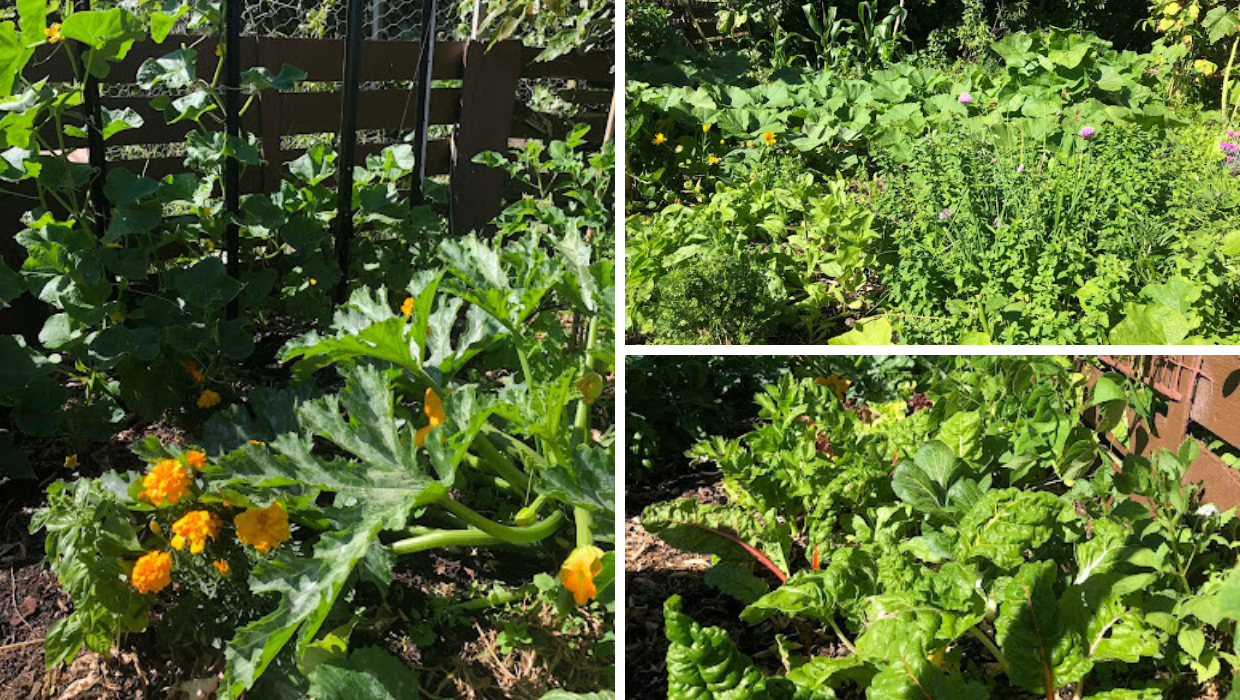
The pumpkins are preparing for their yearly ‘takeover’.....
Compost at the Heart of It All
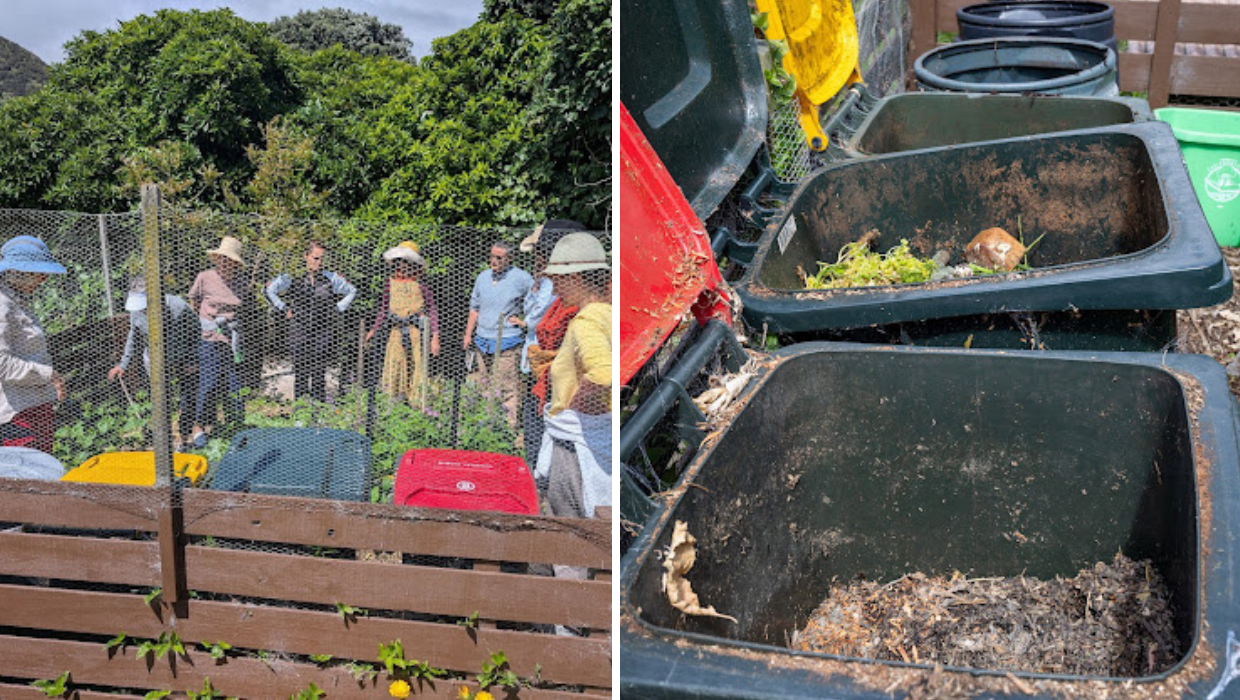
Compost plays a central role in Doris’s system. We were shown her different compost brews and how they are layered. Fresh, nitrogen-rich materials like food scraps and lawn clippings are balanced with carbon-rich materials such as leaves, untreated sawdust and arborist mulch. This balance prevents the compost from going anaerobic.
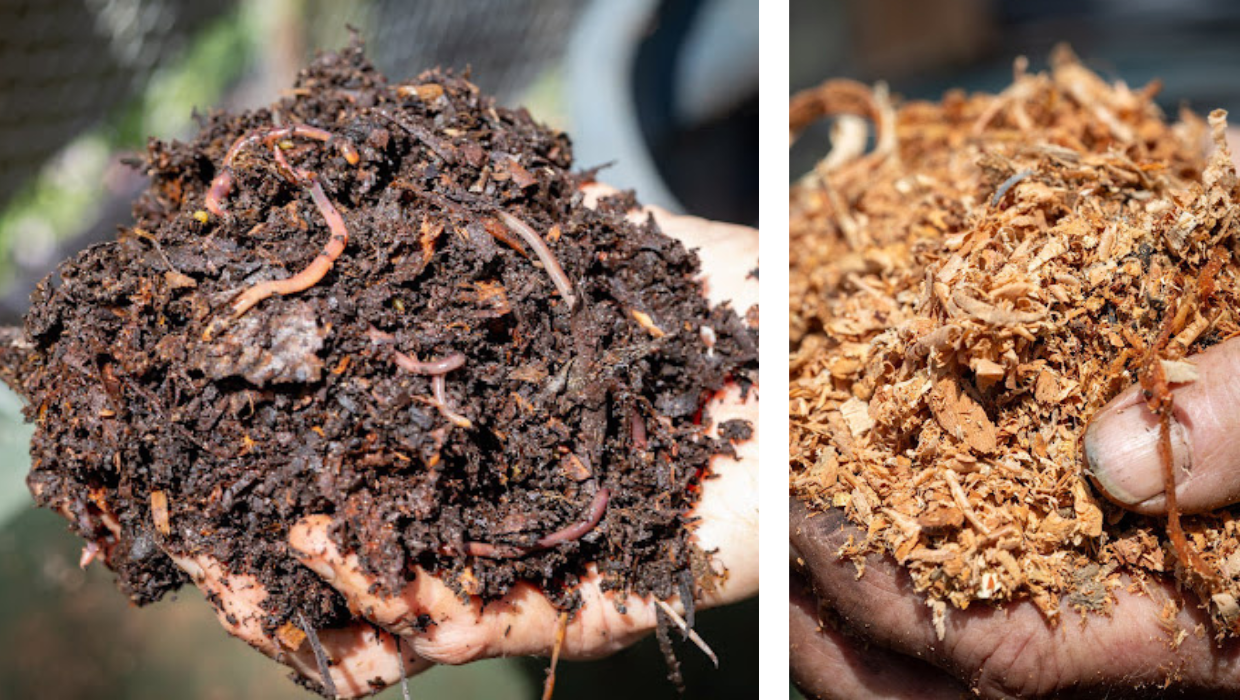
Left: Compost full of life! Right: Untreated sawdust, as an example of carbon, to add to the mixture
Because food scraps are included, the compost is contained in a wheelie bin with the bottom removed, sitting on fine mesh to keep rats out. The compost is kept moist but not wet, and turned regularly.
An alternative method Doris shared is using an arborist mulch pile. By mixing it with manure, wetting it, covering it with a tarpaulin and inoculating it with finished compost, rich living compost can be created within a few months. A word of caution was shared about using fresh arborist mulch directly on gardens, as large amounts can draw nitrogen from the soil as it breaks down.
Beyond the Fence Line
Bob and Doris have been part of the Paekākāriki community for many years, and their gardening extends well beyond their own boundary. We walked down the drive to visit the pātaka kai, a community food cabinet where people share surplus produce.
From there, we visited another garden Doris tends in an elderly neighbour’s backyard. This lower, more sheltered spot has long been used as a vegetable garden. Doris maintains it in an orderly style to honour the neighbour’s late husband. Beans, potatoes, cucumbers and tomatoes grow in neat rows, still softened by the presence of basil.
Food, Reflection and Principles
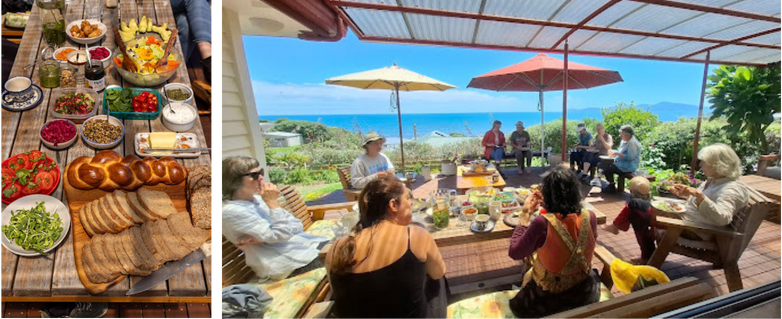
We returned to the house for a wholesome lunch, with contributions from the garden, participants and four different breads baked by Doris.
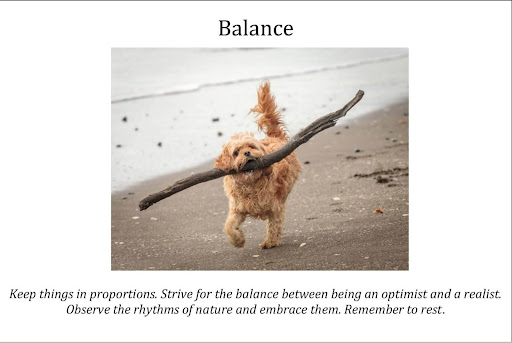
At the start of the day, each participant had chosen a card featuring a permaculture design principle. We ended the gathering by reflecting on these principles and how they applied to our own situations, as well as how we saw them expressed in Doris’s garden and lifestyle. We were also given a brief overview of the permaculture design process, applicable to both land-based and social systems.
Community Gardens and Lasting Impressions
Although we didn’t visit the community gardens during the event, we were encouraged to explore them afterwards, which a friend and I did. It was inspiring to see how much they have developed, particularly the composting system that uses food scraps collected from the village through PaeCycle. Fruit trees are thoughtfully placed throughout the space and supported by companion planting that encourages biodiversity and supports bees.
What stayed with me most was the way Bob and Doris live the core permaculture ethics of Earth Care, People Care and Fair Share in all aspects of their lives. Their generosity is evident in their actions, their community involvement and their openness to sharing knowledge.
They are deeply aware of the environmental challenges we face, including climate change, and draw inspiration from voices such as David Attenborough, who urges us to rewild our places, and the late Jane Goodall, who reminded us that every choice we make matters. Doris finds hope, fun and empowerment in community projects and in shaping a more sustainable lifestyle close to home.
Retirement has opened up new freedoms and possibilities, along with the challenge of balance. From what I observed, Bob and Doris seem to have found a beautiful equilibrium between personal life, family, community and care for the land.
Permaculture principle reflected: Balance
- Log in to post comments